
A relative has filed a complaint against you. Or a business partner has threatened to “go to the police”. Or an FIR has already been registered and you have heard the police are looking for you. Anticipatory bail is the order that says: if you are arrested in this case, you will be released on bail.
The law changed in July 2024
From 1 July 2024, the Bharatiya Nagarik Suraksha Sanhita (BNSS) replaced the Code of Criminal Procedure. Anticipatory bail, which was Section 438 CrPC, is now Section 482 BNSS. The idea is the same. For FIRs registered before that date, the old law still applies.
Who can apply
Anyone who has a reasonable belief that they may be arrested for a non-bailable offence. The belief must be based on something real: a complaint already filed, a written threat, a notice from the police, an FIR naming you. A general worry is not enough.
You do not have to wait for an FIR. But you must be able to show the court what the case is likely to be about.
Which court
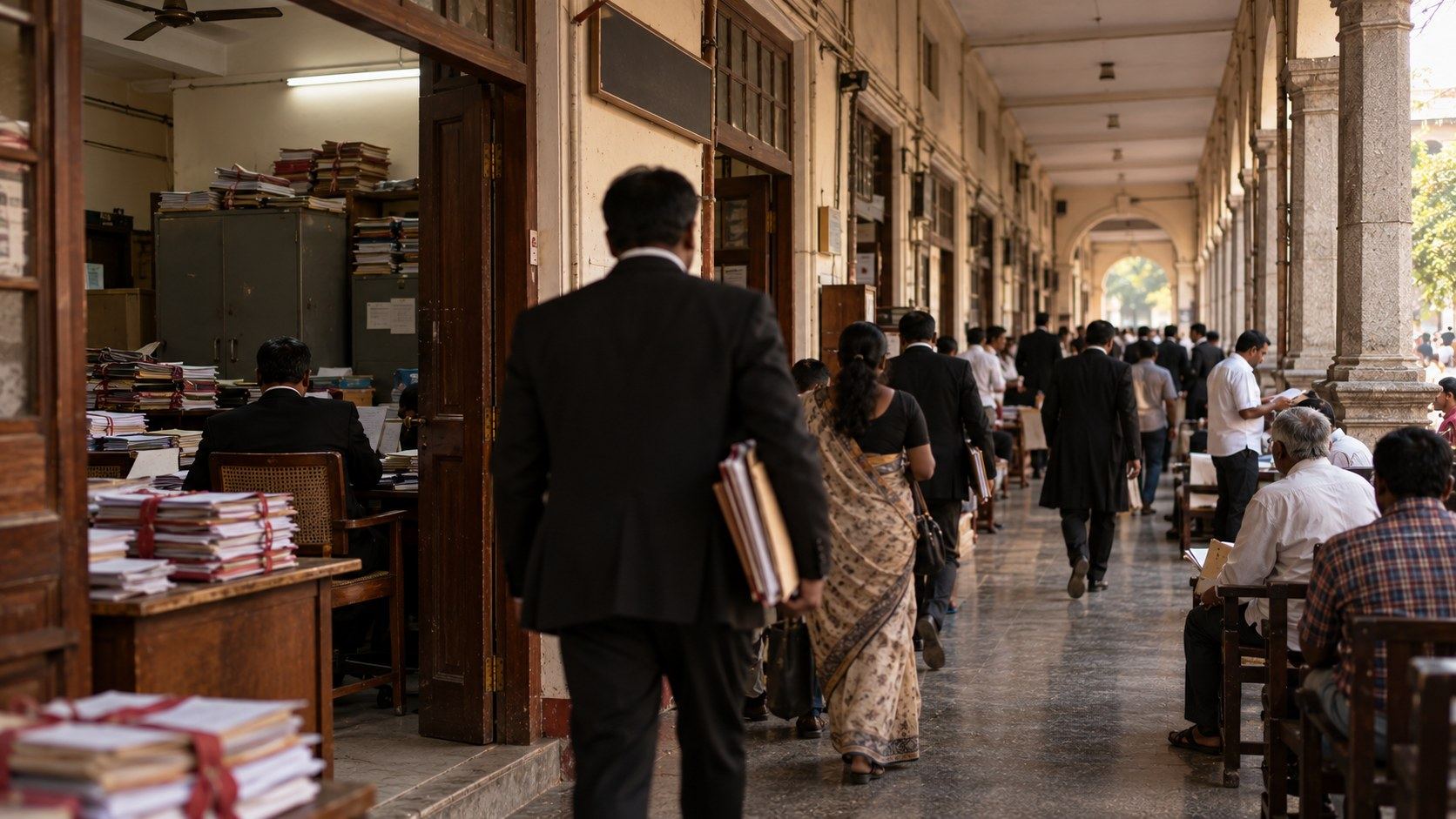
You can apply to the Sessions Court or directly to the High Court of Karnataka. In practice, most applications go to the Sessions Court first. For Bengaluru city cases, that usually means the City Civil and Sessions Court complex on K.G. Road. If the Sessions Court rejects it, you can apply to the High Court.
What the court looks at
- what the accusation is and how serious the offence is
- your past record, including any earlier cases
- whether you are likely to run away or not cooperate
- whether the complaint looks like it was filed to harass or humiliate you
- whether custody is actually needed for the investigation
Documents to bring to your lawyer
- a copy of the FIR or the complaint, if you have it
- any notice from the police
- messages, letters or recordings of threats
- documents that show your side, such as agreements, bank records, earlier complaints you made
- your ID and address proof
- details of anyone who can stand surety
How long it takes
The application is filed, the court issues notice to the public prosecutor, and the police are asked for a report. Some courts grant interim protection on the first date, meaning no arrest until the application is decided. The final hearing can take from a few days to a few weeks depending on the court and the case.
Conditions the court may impose
- appear before the investigating officer when called
- do not threaten or contact witnesses
- do not leave the country, or surrender your passport
- give a bond with one or two sureties
Break a condition and the bail can be cancelled.
If the offence carries less than seven years
For offences punishable with up to seven years, the police are generally expected to issue a notice to appear under Section 35 BNSS rather than arrest straight away. If you get such a notice and cooperate, arrest is often not needed at all. Do not ignore the notice. Talk to a lawyer before you go.
Questions people ask
Can I get anticipatory bail without an FIR?
Yes, if you can show a specific and real fear of arrest, such as a complaint already given to the police or a written threat.
How long is anticipatory bail valid?
The Supreme Court has held that it need not be limited to a fixed period and can continue till the end of the trial, unless the court that grants it says otherwise.
Is anticipatory bail available in dowry and domestic cases?
Yes. Cases under the dowry and cruelty provisions are among the most common reasons people apply. The court looks at the facts of each case.
What happens if anticipatory bail is rejected?
You can apply to the High Court. If that also fails, you can approach the Supreme Court, or surrender and apply for regular bail.
Talk to us about your matter
Call or WhatsApp to fix a time. Bring your papers to the office in Rajarajeshwari Nagar.
This article is general information about the law as it stood when it was written. Your facts change the answer. Speak to an advocate before you act on it.