
You went to the police station with a police complaint. The officer listened, then said it is a “civil matter”, or told you to come back tomorrow, or to go to some other station. You came home without an FIR.
If what you described is a cognizable offence, meaning one where the police can arrest without a warrant (theft, cheating, assault, harassment of a woman, threats and most serious crimes), the officer in charge must register an FIR. That is the law under Section 173 of the Bharatiya Nagarik Suraksha Sanhita (BNSS), which replaced Section 154 of the CrPC from 1 July 2024. The Supreme Court said the same thing in Lalita Kumari v. Government of Uttar Pradesh (2013): registration is mandatory when the information discloses a cognizable offence.
When the station still refuses, there are two clear steps: write to the senior officer, and then go to the magistrate. This article walks through both.
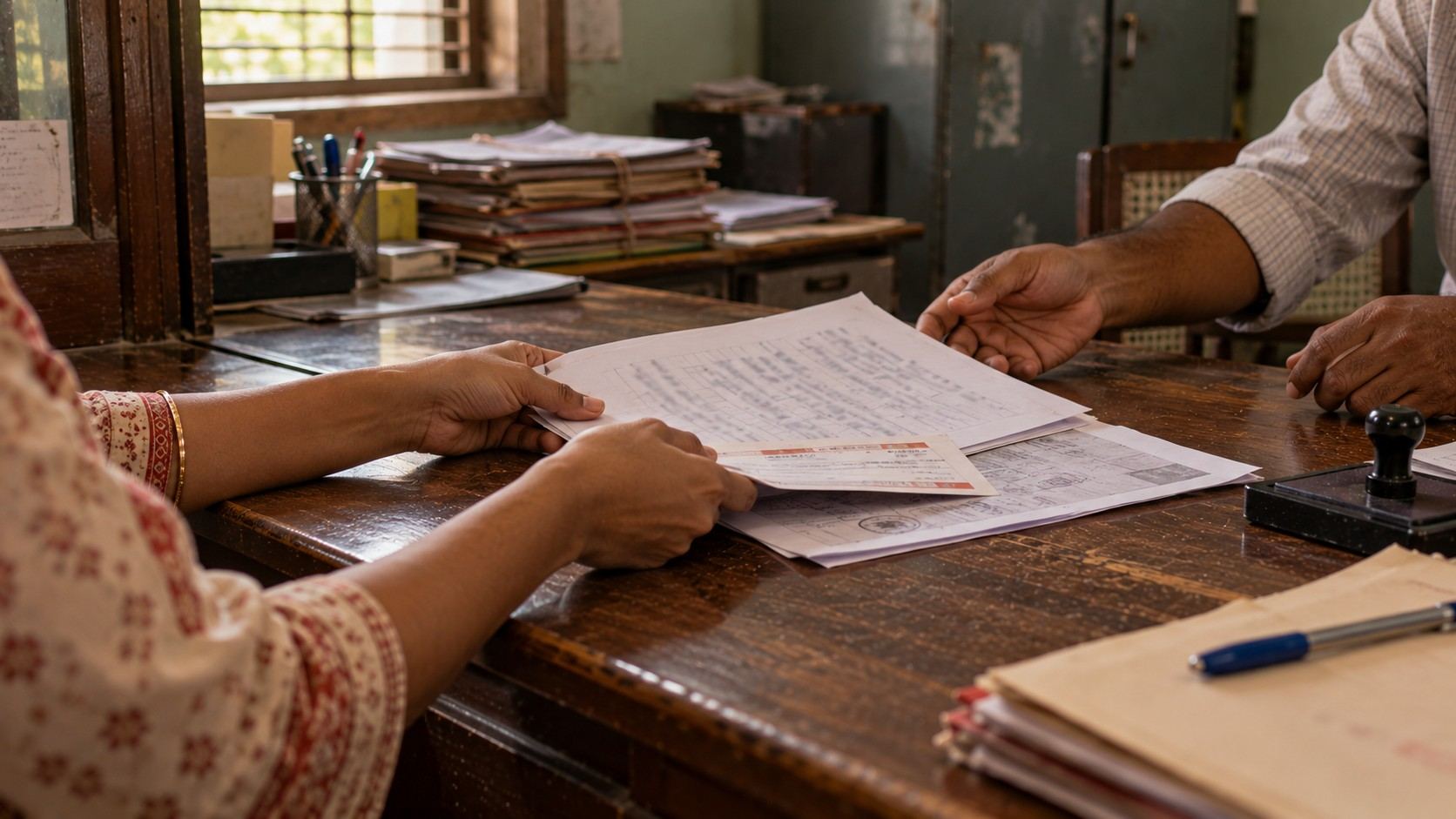
FIR or police complaint: what is the difference
A complaint is what you give the police. An FIR (First Information Report, ಪ್ರಥಮ ಮಾಹಿತಿ ವರದಿ) is the police’s formal record of it, with a number, which starts the investigation.
For a non-cognizable offence (simple insult, minor hurt in some cases), the police do not register an FIR. They record it in a register and refer you to the magistrate. So the first question is whether your facts disclose a cognizable offence. A lawyer can tell you in one meeting.
What Section 173 BNSS gives you
- Any police station, any area. Information can be given to any station “irrespective of the area where the offence is committed”. This is the zero FIR. The station registers it and transfers it to the station with jurisdiction.
- Orally or electronically. Information can be given in person, or by electronic means. An e-complaint is taken on record once you sign it within three days.
- A free copy. You are entitled to a copy of the FIR free of cost.
- Women complainants. For certain offences against women, the information is to be recorded by a woman police officer.
Section 173(3) is the exception officers sometimes rely on. For offences punishable with three years or more but less than seven years, the station officer may, with permission from an officer not below the rank of Deputy Superintendent of Police, hold a preliminary enquiry of up to 14 days to see if there is a prima facie case. That is a limited power. It does not let the station sit on a complaint indefinitely, and it does not apply to offences punishable with seven years or more.
Step 1: give it in writing and get an acknowledgement
Do not rely on telling your story aloud. Write a complaint that sets out:
- who you are, with address and phone number
- what happened, in date order, with places and times
- who did it, if you know
- what loss or injury you suffered
- the documents, screenshots or witnesses you have
Make two copies. Ask the station to put a seal, date and signature on your copy. If they refuse even that, note the date, time, the officer’s name if you know it, and send the complaint by registered post or speed post to the station. Keep the postal receipt.
Step 2: the online route
The Karnataka State Police site, ksp.karnataka.gov.in, links to the Police Seva citizen portal (policeseva.ksp.gov.in) and the Karnataka State Police app. These carry citizen services, an FIR search, and an e-FIR option for some cases such as vehicle theft. Check the current site for what can be filed online, since the services change.
For online fraud and other cyber offences, use the national portal and helpline instead. Our article on cyber crime complaints in Bengaluru explains 1930 and the CEN police stations. In an emergency, call 112.
Step 3: write to the DCP or SP under Section 173(4)
If the station refuses to register the FIR, Section 173(4) BNSS (old Section 154(3) CrPC) lets you send the substance of the information, in writing and by post, to the Superintendent of Police. In Bengaluru city, which is a police commissionerate, this is the Deputy Commissioner of Police (DCP) of the division the station falls under. In Bengaluru Rural and other districts, it is the district SP.
If the senior officer is satisfied that a cognizable offence is disclosed, they must investigate the case themselves or direct an investigation.
Send it by registered post or speed post, attach your original complaint and the acknowledgement, and keep copies of everything. You will need them for the next step.
Step 4: application to the magistrate under Section 175(3)
If the DCP or SP also does nothing, you can apply to the Judicial Magistrate under Section 175(3) BNSS (old Section 156(3) CrPC) for an order directing the police to register and investigate.
The BNSS added conditions that courts now apply strictly:
- you must have first approached the SP or DCP under Section 173(4), and you must file a copy of that application
- the application must be supported by an affidavit
- the magistrate may make an enquiry and must consider what the police officer says before passing an order
The Supreme Court and several High Courts have treated these as mandatory. An application that skips the letter to the SP or the affidavit is likely to be returned. For Bengaluru city cases, these applications are usually filed before the magistrate courts at the CMM court complex on Nrupatunga Road.
You can also file a private complaint before the magistrate, where the court takes evidence itself. Which route suits you depends on the facts and how much investigation is needed. That is where an advocate helps.
If you are on the other side
Sometimes the person asking “why did the police not file an FIR” is worried that one is about to be filed against them. If that is you, read our guide on anticipatory bail in Bangalore, and see the criminal lawyer in Bangalore page for the work we do on both sides.
Questions people ask
Can the police refuse to register an FIR?
Not if the information discloses a cognizable offence. They can hold a preliminary enquiry only in the limited cases allowed under Section 173(3) BNSS, or where the Lalita Kumari judgment permits it.
What is a zero FIR?
An FIR registered at any police station, even if the offence happened in another station’s area. The station then transfers it to the right station.
How do I complain if the police do not file my FIR in Bangalore?
Send your complaint in writing by post to the DCP of the division under Section 173(4) BNSS. If that fails, apply to the magistrate under Section 175(3) with an affidavit.
Can I file an FIR online in Karnataka?
Some services, such as e-FIR for vehicle theft, are available through the Karnataka State Police portals. Cyber fraud is reported on cybercrime.gov.in or by calling 1930. Check the current site for what is available.
How long does the magistrate take to order an FIR?
It depends on the court and the case. The magistrate may call for a report from the police first, so it can take a few weeks.
Talk to us about your matter
Call or WhatsApp to fix a time. Bring your papers to the office in Rajarajeshwari Nagar.
This article is general information about the law as it stood when it was written. Your facts change the answer. Speak to an advocate before you act on it.