
You try to pay at a shop, the UPI payment fails, and the bank tells you your account is under a “debit freeze” on police instructions. Often the order came from a cyber crime police station in another state, over a payment you received weeks ago from someone you have never met. You have done nothing wrong, but your salary is stuck.
A bank account freeze of this kind can be lifted, or cut down to the disputed amount. The steps are: find out who ordered it and for how much, write to the investigating officer, and if that does not work, go to the magistrate or the High Court. Courts in Karnataka and elsewhere have said clearly in 2025 and 2026 that freezing a whole account over a small disputed sum is usually wrong.
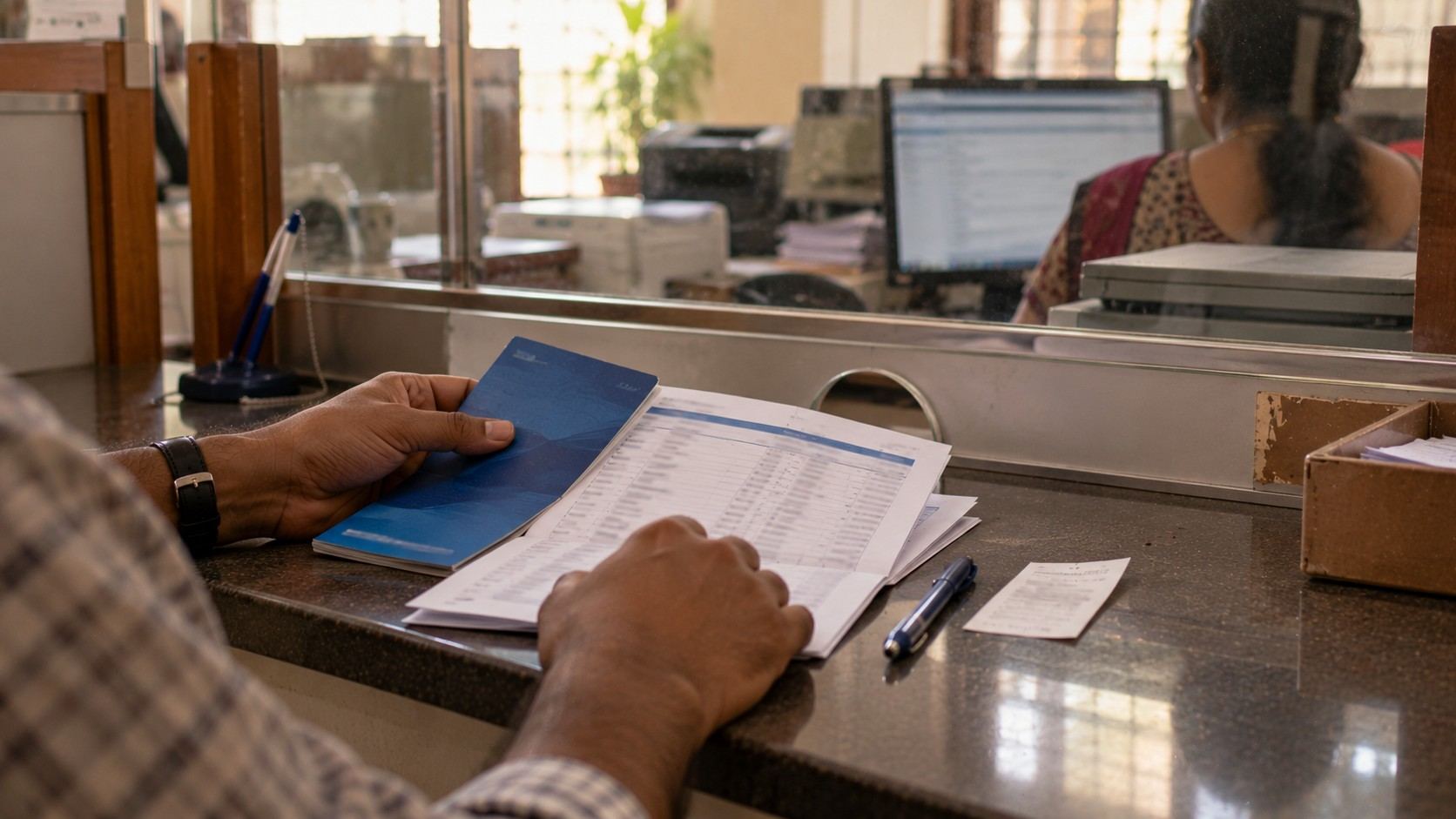
Why innocent people get their accounts frozen
When someone is cheated online, the fraudster rarely keeps the money in one account. It is moved within minutes through several accounts, called “layers”. A victim calls 1930 or reports on cybercrime.gov.in, and the system flags every account the money passed through.
So the person who sold a used phone online, the shopkeeper who took a UPI payment, or the trader who received money for goods can all end up on that list. The police system sees money arriving from a flagged account, and the bank puts a hold on yours. Being frozen does not mean you are an accused. It means your account sits somewhere in the money trail.
What the police can and cannot do: Sections 106 and 107 BNSS
Two sections of the Bharatiya Nagarik Suraksha Sanhita (BNSS) matter here.
| Provision | What it allows | Who decides |
|---|---|---|
| Section 106 BNSS (old Section 102 CrPC) | Police may seize property suspected to be linked to an offence | The police officer, who must report the seizure to the magistrate at once under Section 106(3) |
| Section 107 BNSS (new, no exact CrPC match) | Attachment of property that is “proceeds of crime”, and later distribution to victims | The magistrate or court, on a police application approved by the SP or Commissioner, after a 14-day show-cause notice to the account holder |
Courts disagree on how far Section 106 goes. In Kartik Yogeshwar Chatur v. Union of India (November 2025), the Bombay High Court held that the police cannot debit-freeze an account under Section 106 at all, that attachment needs a magistrate’s order under Section 107, and that banks may only put the disputed amount under lien.
The Karnataka High Court has taken a different view of the police power. In State of Karnataka v. JAR Gold Retail Pvt. Ltd. (reported August 2026), it held that the police may debit-freeze an account during investigation under Section 106 without the magistrate’s approval first, but only with “scrupulous compliance” with Section 106(3), which means reporting the freeze to the magistrate. If the police never sent that report, the freeze can be questioned.
Freezing the whole account for a small amount
On how much can be frozen, Karnataka courts have been firm.
- In International School Bangalore v. Standard Chartered Bank (March 2026), the Karnataka High Court called a full freeze over one fee payment “arbitrary and unreasonable” and limited it to the disputed amount of Rs 5 lakh.
- In a June 2026 ruling, Justice Suraj Govindaraj dealt with a Bengaluru resident whose whole account was frozen when two police stations, one in Gujarat and one in West Bengal, had asked for holds of Rs 15,000 and Rs 10,000. The bank said more requests might come. The court said a bank only carries out directions, cannot freeze on guesswork about future requests, and should normally put a lien on the amount named and let the customer use the rest.
The Allahabad and Madhya Pradesh High Courts have said much the same in 2026.
Step 1: Find out who ordered the freeze
Your bank will not always volunteer this. Write to your home branch, and keep a copy, asking for:
- the name of the police station and the state
- the complaint or acknowledgement number (often an NCRP number from cybercrime.gov.in) or FIR number
- the amount on lien and the date of the request
- a copy of the police letter or notice, if they will give it
If several police stations have sent requests, ask for each one. The amount each station wants on hold is what you will be arguing about.
Step 2: Write to the investigating officer
Send a short letter or email to the station that ordered the hold. Explain what the incoming money was for, and attach proof: an invoice, a delivery record, a chat with the buyer, your account statement. Ask the officer to tell the bank to release the account, or at least to limit the lien to the disputed amount.
Under the 2026 Standard Operating Procedure issued by the Ministry of Home Affairs’ Indian Cyber Crime Coordination Centre for the CFCFRMS system, there is also a grievance route. You complain to your bank, the bank forwards it through the portal’s grievance module, the investigating officer considers it, and it can then go to a district grievance officer and, on appeal, a state grievance officer. Ask your bank to log your grievance this way and give you the reference.
Calls to another state’s police often go unanswered. Keep a written record of every attempt, because a court will want to see that you tried.
Step 3: Go to the magistrate or the High Court
If the officer does not respond or refuses, you have two routes.
The magistrate. You can apply to the magistrate who has jurisdiction over the police station that ordered the freeze, asking for the money to be released or the hold limited. If the freeze was reported under Section 106(3), it is already before that court. The catch is that the court may be in another state.
The High Court of Karnataka. If your account is with a branch in Bengaluru and the freeze is plainly excessive, a writ petition before the High Court is often the faster route, especially where the police station is far away, there is no FIR, or the bank has frozen far more than was asked. The rulings above came out of petitions like this.
We usually suggest starting with Steps 1 and 2 while preparing the petition, so that the court sees you gave the police a fair chance.
If you are also named as an accused
Sometimes the police do more than freeze. You may get a notice to appear under Section 35 BNSS (old 41A CrPC). Do not ignore it, and do not go without advice. Read our guide to anticipatory bail in Bangalore if you fear arrest. If your money was taken by fraud, the steps are different: see what to do after losing money to online or UPI fraud.
Questions people ask
Can police freeze my bank account without telling me?
They can ask the bank to put a hold without prior notice to you. But under Section 106(3) BNSS the seizure must be reported to the magistrate, and a Section 107 attachment needs a court order after notice to you.
How long does a cyber crime freeze last?
There is no fixed period that applies to every case. It usually lasts until the police lift it or a court orders release, which is why writing to the officer and, if needed, going to court matters.
Can the bank freeze my whole account if the police asked for a smaller amount?
The Karnataka High Court has said a bank should normally put a lien only on the amount named in the police request and let you use the rest, unless the authorities specifically direct a full freeze.
Will I get the money on lien back?
If the money is shown to be a genuine payment to you, yes, once the police or court release it. If it is traced to a fraud, the court may order it returned to the victim.
Which court do I approach for a bank account freeze in Bengaluru?
Either the magistrate with jurisdiction over the police station that ordered it, or the High Court of Karnataka through a writ petition. See our cyber crime lawyer page for how we handle these.
Talk to us about your matter
Call or WhatsApp to fix a time. Bring your papers to the office in Rajarajeshwari Nagar.
This article is general information about the law as it stood when it was written. Your facts change the answer. Speak to an advocate before you act on it.