
If your employer has not paid your salary, or has ended your job without a fair reason or proper notice, the route depends first on which category you fall in. A “worker” under labour law can go through conciliation to the labour court, now called the Industrial Tribunal, and can ask for reinstatement. A manager or senior employee usually cannot. Their remedy for termination is a claim for money under the contract, in a civil court.
Unpaid salary is simpler. Since the labour codes came into force, almost every employee, including managers, can claim unpaid wages before the wage authority.
Four labour codes replaced the Industrial Disputes Act, the Payment of Wages Act and other older laws on 21 November 2025. Karnataka’s own rules under the codes were still being finalised at our last check, so some forms and offices are in transition.
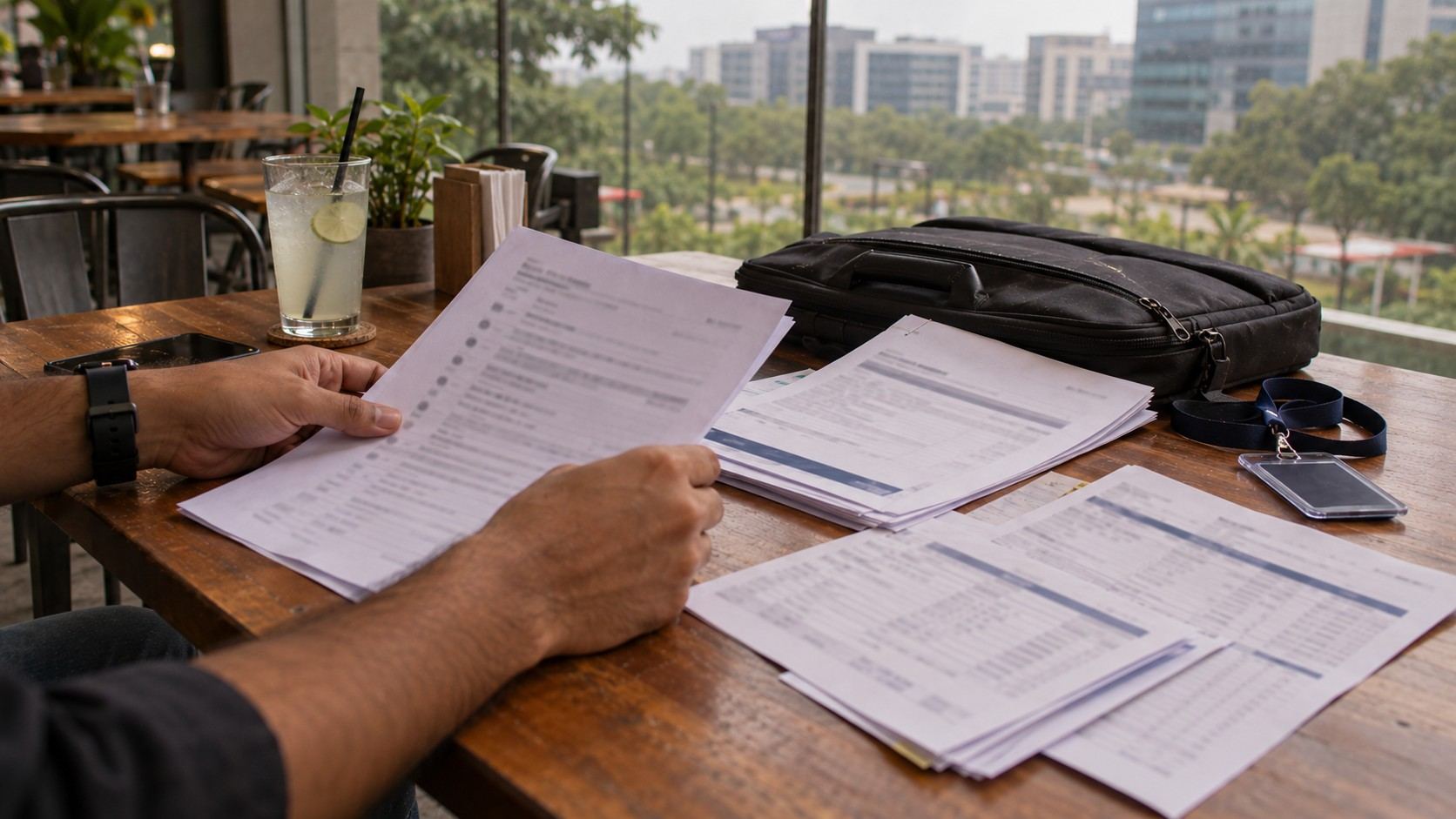
Worker or not: the question that decides the route
Under the Industrial Relations Code, 2020, a “worker” is anyone employed to do manual, unskilled, skilled, technical, operational, clerical or supervisory work. Two groups are left out:
- people employed mainly in a managerial or administrative capacity
- people in a supervisory role earning more than ₹18,000 a month (or a higher amount the government notifies)
Your job title does not decide this. What you actually do most of the day does. A software engineer who writes code and does not manage a team may well be a worker. A “team lead” who approves leave, assigns work and reviews others is more likely supervisory. Courts look at the main nature of the duties.
| Worker | Not a worker (manager, senior supervisor) | |
|---|---|---|
| Unpaid salary | Wage authority under the Code on Wages | Wage authority under the Code on Wages |
| Termination | Conciliation, then Industrial Tribunal | Civil suit for damages under the contract |
| Can ask for reinstatement | Yes | Generally no, only money |
Unpaid salary: what the law says
The Code on Wages, 2019 sets time limits for paying wages and applies to all employees, not only to lower-paid staff as the old Payment of Wages Act largely did. When your employment ends by resignation, dismissal, removal or retrenchment, wages due must be paid within two working days.
Note that this two-day rule covers “wages” as the Code defines them. Gratuity, retrenchment compensation and some other amounts in a full and final settlement have their own rules and timelines. For gratuity, see gratuity not paid in Karnataka.
To recover unpaid salary:
- Write to HR and your manager with the months unpaid and the amount. Keep it factual.
- Send a legal notice if there is no payment. Give a date. Many employers pay at this stage. See legal notice in Bengaluru.
- File a claim before the authority under the Code on Wages, through the Karnataka Labour Department. The authority can direct payment and also order compensation in addition to the amount withheld.
There is a time limit for filing a wage claim, so do not let it sit for months. If the employer gave you a cheque for dues and it bounced, you also have a separate remedy under Section 138 of the Negotiable Instruments Act. See our article on cheque bounce cases.
Wrongful termination of a worker: conciliation and the labour court
For a worker, a dismissal, discharge or retrenchment can be raised as an industrial dispute even by one worker acting alone.
The route under the Industrial Relations Code is:
- Grievance Redressal Committee. Establishments with 20 or more workers must have one. You can raise the grievance there first.
- Conciliation. You apply to the conciliation officer of the Labour Department. The officer calls both sides and tries to settle.
- Industrial Tribunal. If conciliation does not settle the dispute within 45 days of your application, you can go directly to the Industrial Tribunal. The Tribunal has taken over the work of the old labour courts.
The Tribunal can order reinstatement, back wages, or compensation instead of reinstatement. In practice, many disputes settle at conciliation with a payment.
There are time limits for raising the dispute, counted from the date of termination. Raise it promptly.
Retrenchment and closure
If you lost your job because the employer cut posts, that is retrenchment. A worker with at least a year of continuous service is entitled to notice (or pay in lieu) and retrenchment compensation of 15 days’ average pay for each completed year. Larger establishments need government permission before retrenching. If these steps were skipped, the retrenchment can be challenged.
Termination of a manager: notice pay and a civil suit
If you are not a worker, your rights come mainly from your appointment letter or employment contract and the company’s policies.
Typical claims are:
- Notice pay, if the employer ended the job without the notice period in the contract
- Unpaid salary, bonus, incentives or leave encashment that the contract or policy promised
- Damages where the termination broke the contract
You generally cannot force the employer to take you back, because courts do not usually enforce contracts of personal service. The remedy is money. A claim like this goes to the civil court, which in Bengaluru city is usually the City Civil Court. Read our page on civil cases in Bangalore.
Read your contract for an arbitration clause before you file. If there is one, the dispute may have to go to arbitration instead.
What to collect before you act
- Appointment letter, offer letter and any revisions
- Payslips, bank statements showing salary credits and gaps
- Employee handbook or HR policies on notice, leave and bonus
- The termination letter or email, and any show cause notice
- Emails or chats about your performance, the salary delay, or promises to pay
- Your relieving letter and full and final settlement statement, if given
Do not sign a resignation letter, a full and final settlement, or a release you have not read. Signing “received in full” for a partial amount can weaken a later claim.
Questions people ask
Can I complain to the labour department if my salary is not paid?
Yes. The Karnataka Labour Department handles claims under the Code on Wages. The authority can direct payment and award compensation.
Can an IT employee in Bengaluru go to the labour court?
It depends on what the job involves, not the job title. Employees whose main work is technical and who do not mainly manage or supervise may count as workers. Senior managers usually do not.
What is the time limit for paying final settlement?
Under the Code on Wages, wages due on resignation, dismissal, removal or retrenchment must be paid within two working days. Gratuity has a separate 30-day limit.
Can I get my job back after wrongful termination?
A worker can ask the Industrial Tribunal for reinstatement with back wages. A manager usually gets compensation, not reinstatement.
Is a legal notice needed before going to the labour court?
It is not always required, but it often leads to payment without a case. It also creates a written record of your demand.
Talk to us about your matter
Call or WhatsApp to fix a time. Bring your papers to the office in Rajarajeshwari Nagar.
This article is general information about the law as it stood when it was written. Your facts change the answer. Speak to an advocate before you act on it.