
A SARFAESI notice means your bank or housing finance company has classified your loan as a non-performing asset (NPA) and intends to take the property you mortgaged, without going to court first. The law that allows this is the Securitisation and Reconstruction of Financial Assets and Enforcement of Security Interest Act, 2002.
The first notice, under Section 13(2), gives you 60 days to pay the full amount demanded. If you do not, the bank can take possession under Section 13(4) and then auction the property. If you think the bank is acting wrongly, your remedy is an application to the Debts Recovery Tribunal (DRT) under Section 17, within 45 days of the bank’s action. Bengaluru has two DRTs, DRT 1 and DRT 2.
There are several points at which you can still pay, settle or object. Missing the deadlines closes them one by one.
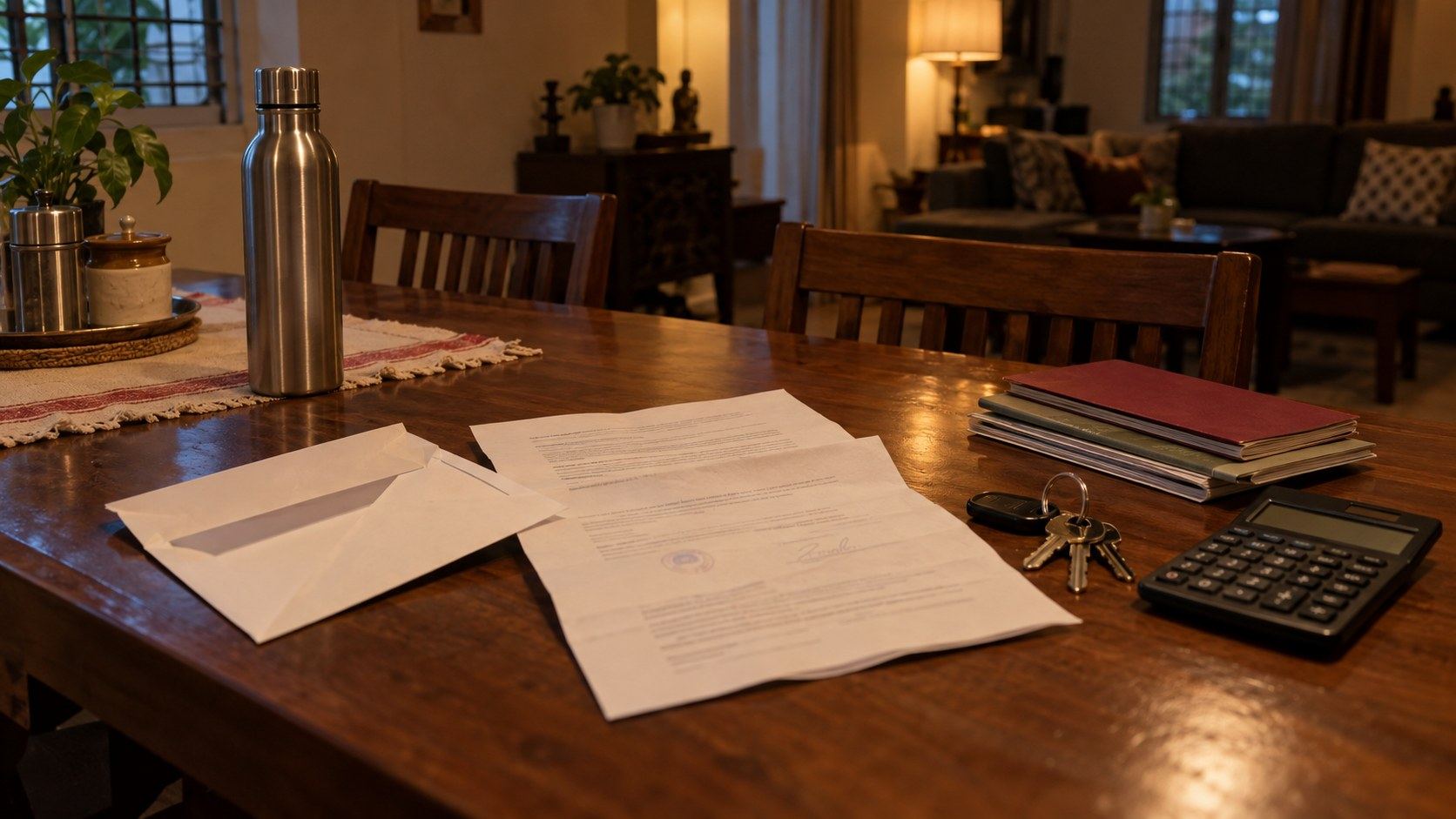
The stages and the deadlines
| Stage | What the bank does | Your deadline or option |
|---|---|---|
| NPA | Classifies the loan as non-performing after defaults | Talk to the bank, regularise or restructure before notices start |
| Section 13(2) notice | Demands the full outstanding amount | 60 days to pay. You can send a written objection |
| Section 13(3A) reply | Must consider your objection and, if rejecting it, give reasons | The bank should reply within 15 days of your representation |
| Section 13(4) possession | Takes possession; affixes a possession notice on the property and publishes it in two newspapers within 7 days | 45 days from this measure to apply to the DRT under Section 17 |
| Sale notice | Gives you a 30-day notice of sale, then publishes the auction notice | You can still pay the full dues before the auction notice is published |
| Auction | Sells the property | Challenge only through the DRT, on grounds of illegality |
The 60-day Section 13(2) notice
The 13(2) notice must state the amount due and the property the bank intends to enforce against. During the 60 days, nothing has been taken yet. This is the stage with the most room.
What to do:
- Check the figures. Compare the amount with your loan statement. Ask for a statement of account if you do not have one.
- Check the dates. When were you declared NPA? Was the classification correct under the bank’s rules?
- Send a representation or objection in writing under Section 13(3A), within the 60 days. Point out wrong amounts, payments not credited, or any defect in the notice. The bank must consider it and communicate reasons if it does not accept it. Courts have treated the duty to reply as mandatory.
- Propose a payment plan or one-time settlement, in writing, if you can pay part.
An objection does not stop the process by itself, and you cannot go to the DRT at this stage. But a well-drafted objection creates a record that matters later.
Possession under Section 13(4)
If you do not pay within 60 days, the bank can take possession. For a house or flat, the authorised officer delivers a possession notice, affixes it on the property and publishes it in two newspapers, one of them in the local language, within seven days.
Initially this is often symbolic possession: the notice is on the door but you still live there. To take physical possession against resistance, the bank usually applies to the Chief Metropolitan Magistrate or District Magistrate under Section 14, who then helps the bank take the property. The magistrate’s role is limited to checking the bank’s affidavit and assisting it. Your challenge to the bank’s action lies before the DRT.
The 45-day window to approach the DRT
Under Section 17, any person aggrieved by a measure under Section 13(4), including the borrower, a guarantor or a tenant, can file a securitisation application (SA) before the DRT within 45 days from the date of the measure. For property in Bengaluru, this is filed before DRT 1 or DRT 2 in Bengaluru, through the e-DRT filing system.
Common grounds are:
- the loan was wrongly classified as NPA
- the 13(2) notice was defective or the objection was never answered
- the possession or sale notices were not served or published as the rules require
- the property is agricultural land, which the Act does not cover
- the reserve price was far below the property’s value
The DRT can declare the bank’s action invalid and restore possession. It is meant to decide within 60 days, extendable to four months, though in practice it often takes longer. A stay is usually granted, if at all, on terms such as depositing part of the dues.
If you lose before the DRT, you can appeal to the Debts Recovery Appellate Tribunal (DRAT) within 30 days. A borrower must deposit 50% of the debt due, which the DRAT can reduce to not less than 25%.
The sale and your right to redeem
Before selling immovable property, the bank must give you 30 days’ notice of the sale, and the sale cannot happen until 30 days after the public sale notice.
Under Section 13(8), as amended in 2016, you can stop the sale by paying the full dues, with costs and charges, before the auction notice is published. In Celir LLP v. Bafna Motors (2023), the Supreme Court held that once the auction notice is published, this right is lost. This is the last point at which paying the bank alone saves the property, so do not leave it to the end.
When SARFAESI does not apply
Under Section 31, the Act cannot be used for, among others:
- agricultural land
- loans where the amount due is less than ₹1 lakh
- cases where the amount due is less than 20% of the principal and interest
The loan must also be secured and classified as an NPA. A personal loan or credit card debt without a mortgage goes through other routes, such as a civil suit or a recovery case at the DRT. For cheque bounce cases arising from loan repayment, see our separate article.
Talking to the bank still matters
Many SARFAESI cases end with payment, a restructured schedule or a one-time settlement rather than an auction. Write to the branch and the regional office with a realistic proposal, keep copies, and get any settlement in writing on the bank’s letterhead before you pay.
If the property is also tied up in a family dispute, or in a partition suit, tell your lawyer at once. Other sharers may have rights the bank has to respect.
Questions people ask
How many days does a borrower get after a SARFAESI 13(2) notice?
Sixty days from the date of the notice to pay the full amount demanded. During that time you can also send a written objection, which the bank must consider.
Can I approach the DRT after receiving a 13(2) notice?
Generally no. The DRT application under Section 17 lies against a measure under Section 13(4), such as taking possession. File it within 45 days of that measure.
Where is the Debt Recovery Tribunal in Bangalore?
Bengaluru has two Debts Recovery Tribunals, DRT 1 and DRT 2. Applications are filed through the e-DRT system, and the case is heard by the tribunal with jurisdiction over your property.
Can the bank auction my house without informing me?
No. The bank must serve a 30-day notice of sale and publish a sale notice before the auction. Missing these steps is a ground to challenge the sale before the DRT.
Can I stop a SARFAESI auction by paying?
Yes, if you pay the full dues with costs before the auction notice is published. After that, the Supreme Court has held that the right to redeem is lost.
Talk to us about your matter
Call or WhatsApp to fix a time. Bring your papers to the office in Rajarajeshwari Nagar.
This article is general information about the law as it stood when it was written. Your facts change the answer. Speak to an advocate before you act on it.