
If a tenant in Bengaluru will not leave after the agreement ends, or has stopped paying rent, the only lawful way to get the house back is through a notice and, if that fails, a court order. Tenant eviction by changing the locks, cutting water or power, or putting belongings on the road is not allowed, and it usually hurts the landlord’s case.
The steps depend on one question: is the property covered by the Karnataka Rent Act, 1999, or not? Most flats and houses rented in Bengaluru today are not, because of the Act’s rent limit and its exemption for newer buildings. That changes which law applies, which notice you send and which court hears the case.
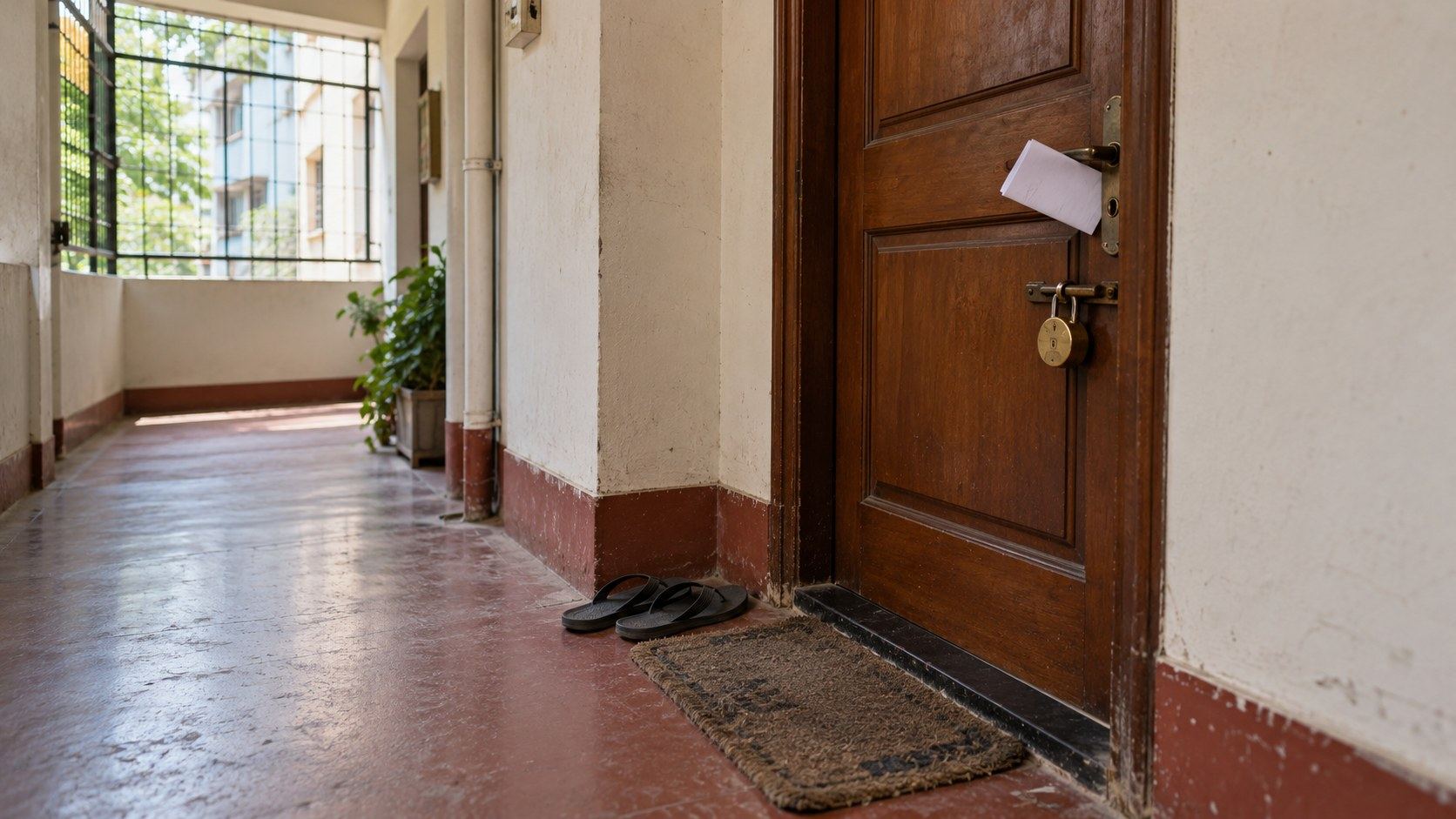
Step 1: Check whether the Karnataka Rent Act applies
Under Section 2(3), the Rent Act does not apply to, among others:
- premises whose rent is more than ₹3,500 a month in the city areas in Part A of its First Schedule (₹2,000 elsewhere)
- buildings for 15 years from when they were built or substantially renovated
- most non-residential premises, except small commercial premises with a plinth area of up to 14 square metres
- premises belonging to the government, local authorities, co-operative societies and certain religious and charitable bodies
If your property falls under any of these, the tenancy is governed by your rental agreement and the Transfer of Property Act, 1882. If it does not, which is more common with old, low-rent tenancies, the Rent Act’s grounds and procedure apply.
Step 2: Send a written notice
Outside the Rent Act, the tenancy has to be ended before you can sue. If the agreement has expired, a notice to vacate is still wise. If it is a month-to-month tenancy, Section 106 of the Transfer of Property Act lets either side end it with 15 days’ notice, unless the agreement says otherwise. The notice should:
- name the tenant, the property and the agreement
- state that the tenancy is terminated and the date by which possession must be handed over
- demand any unpaid rent and say that you will claim damages for use and occupation after that date
Under the Rent Act, if the ground is unpaid rent, you must first serve a demand notice. Section 27(2)(a) allows eviction only if the arrears are not paid within two months of that notice.
A legal notice sent by an advocate often settles the matter. Many tenants leave or agree a date once they see it in writing.
Step 3: File the case in the right court
| Situation | Where it goes in Bengaluru | Law |
|---|---|---|
| Premises covered by the Rent Act | Court of Small Causes, Bengaluru (the “Court” for the city under Section 3 of the Rent Act) | Karnataka Rent Act, Section 27 grounds |
| Premises outside the Rent Act | Civil court, by a suit for possession (ejectment), with arrears and damages | Transfer of Property Act and the agreement |
For tenancies outside the Rent Act, whether the suit goes to the Court of Small Causes or the City Civil Court depends on the value of the claim and what you ask for, such as damages in addition to possession. Your advocate will decide the court before drafting. Our Bengaluru courts guide lists the main court complexes.
Grounds for eviction under the Rent Act
Section 27(2) lists the only grounds on which a court can order a tenant covered by the Act to leave. The ones landlords use most are:
- (a) Unpaid rent not paid within two months of a demand notice
- (b) Subletting or parting with possession without the landlord’s written consent
- (c) Using the premises for a different purpose than they were let for
- (h) Rebuilding or major additions that need the premises vacant
- (j) The tenant already has a house or commercial premises of his own
- (l) Substantial damage to the premises
- (q) The tenant agreed in writing to vacate on a date and did not
- (r) The landlord needs the premises for himself or his family and has no other reasonably suitable place
Separately, under Section 31, a widow, a person with a disability, or a person aged 65 or above can apply for possession of premises they need for themselves or their family.
On (a), the Act gives a tenant one chance: if the court orders eviction for arrears, he can avoid it by paying or depositing the arrears and later rent within one month. A tenant who has used that chance once and defaults again does not get it a second time.
What happens while the case is on
Under Section 45 of the Rent Act, a tenant who wants to contest eviction must pay or deposit the arrears and keep paying rent as it falls due. If he does not, the court can stop him from defending.
Rent Act cases in Bengaluru commonly take months to a few years, depending on whether the tenant contests and how often the case is adjourned. A suit outside the Act follows the normal civil procedure. Against an order of the Court of Small Causes under the Rent Act, a revision lies to the High Court of Karnataka under Section 46.
Once you have the order, if the tenant still does not leave, you file for execution, and the court bailiff delivers possession, with police help if needed.
What not to do
Do not:
- change the locks, remove the tenant’s goods or stop him entering
- cut water, electricity or lift access
- accept rent after the notice without making clear in writing that you are taking it as damages, not as rent, since that can be argued as creating a fresh tenancy
Since the Karnataka Rent (Amendment) Act, 2025 (Karnataka Act 7 of 2026), contraventions of the Rent Act are dealt with by money penalties imposed by the Rent Controller rather than by prosecution. The amendment did not change the grounds for eviction.
For tenants, the same rules work the other way: a landlord cannot throw you out without a court order. If you are a tenant facing this, read our rental agreement guide and keep your rent receipts.
Questions people ask
How long does a tenant eviction take in Bangalore?
If the tenant leaves after a notice, a few weeks. If it goes to court and is contested, commonly months to a few years, depending on the case and the court’s schedule.
Can I evict a tenant without going to court in Karnataka?
Only if the tenant leaves voluntarily. Forcing someone out without a court order, by changing locks or cutting supplies, is unlawful and can lead to a police complaint and damages against you.
Does the Karnataka Rent Act apply to my flat?
Probably not if the rent is above ₹3,500 a month in Bengaluru, or if the building is less than 15 years old. Then the agreement and the Transfer of Property Act govern the tenancy.
What notice period is needed to evict a tenant?
For a month-to-month residential tenancy outside the Rent Act, 15 days under Section 106 of the Transfer of Property Act, unless the agreement gives a different period. Many agreements in Bengaluru provide for one or two months.
Can a landlord evict a tenant for personal use in Bangalore?
Under the Rent Act, yes, if he proves he genuinely needs it for himself or his family and has no other suitable place. Outside the Act, he can end the tenancy as the agreement allows and sue for possession.
Talk to us about your matter
Call or WhatsApp to fix a time. Bring your papers to the office in Rajarajeshwari Nagar.
This article is general information about the law as it stood when it was written. Your facts change the answer. Speak to an advocate before you act on it.